Posted by: Banta | July 9, 2014

Down to Earth

When my dad died five years ago, I had no idea how much I would miss him. If someone had tried to describe to me then the depth and breadth of that loss, I would not have understood. Twice since he died, Dad has visited me, in such a visceral and palpable way that I cannot doubt his presence. Both times he appeared in my half waking state just before dawn. First in a phone call, peppered with the kind of crackling static that made it hard to hear his voice. I told him how much I wanted to talk, but the connection was so poor that I would have to call him back. Imagine my chagrin when I realized what I’d done. There would be no calling him back across that fourth dimension. The next time, he showed up in front of the house where he had lived with my mom in the years before he died, the same house in which he had grown up. He walked right up the driveway, as fit and rosy-cheeked as when he was forty, and wrapped me in a big bear hug. “I sure do love you,” he said, with a warmth that reached down deep and reminded me that he surely did.

The older I get, the more I appreciate George and his legacy. My ecotherapy colleague, Anne Stine, says that one’s legacy is less about accomplishments and more about a quality of being, an energetic impression that remains long after we are gone – like love etched on the heart, and infused into the places we hold sacred.

The quality of being I most associate with George was his down-to-earth approach to life. This odd phrase dates back to 1922, the year before he was born. Then, as now, being down-to-earth meant one was sensible, sober, pragmatic, humble and unpretentious, genuine, perhaps hard-headed, not caught up in superficial things – all of which describe with remarkable accuracy the way George moved through his world and his relationships.

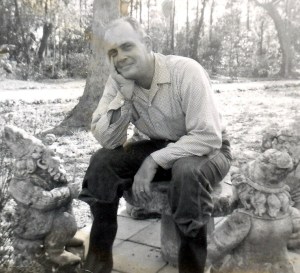
10 With the gnomes

Until recently, I had forgotten that he was also down-to-earth in the most literal sense possible. Up past the garage, between two oak trees, my dad tended a patch of ground that he called the compost pile. He fed it grass clippings, dead leaves, and assorted yard trash. I suspect he tossed in a fair number of fish heads and crab shells, too. But the pile never reeked of dead fish. Rather, it smelled like a forest after rain, and at the bottom of the pile the soil was black and crumbly. Put a spade full of this black gold in a hole, and the scrawniest plant would surely prosper.

At fourteen, I did not yet connect the dots between the grass clippings, leaf mulch, and fish heads, and that black soil at the bottom of the pile. Back then I didn’t know anything about the miracle of compost, the metamorphosis of kitchen and yard refuse into incomparably rich organic fertilizer. When I wanted to make a little garden in the woods next door, Dad suggested I clear out the brush from a sunny clearing first because the plants would need plenty of light. He filled a wheelbarrow with that black gold from his compost pile and showed me how to mix it into the sandy Florida topsoil. Then he left me to my own devices, to plant a few spindly tomato starts and watermelon seeds.

My attention to this fledgling garden was sporadic at best, and I often forgot to check on its progress, or provide regular irrigation. Fortunately, summer in north Florida is nothing if not predictable. Every day dawns with stifling heat and humidity, detonates a few afternoon thunderstorms, and then dissolves into a muggy, mosquito-ridden night. So the tomatoes and the watermelons flourished and bore fruit, with little actual help from me. I attribute the success of that first garden in part to the regular rainfall, but even more to the rich compost that gave it a promising start.

compost happens

Bette Midler once observed: My whole life has been spent waiting for an epiphany, a manifestation of God’s presence, the kind of transcendent, magical experience that lets you see your place in the big picture. And that is what I had with my first compost heap. Every place I have lived for the past thirty-five years – from New Jersey to Florida to western North Carolina – I have planted a vegetable garden and witnessed the magic of compost. The smell of that black gold always reminds me of Dad. With every turn of the pitchfork, every shovel full heaped onto the garden beds, I appreciate the down-to-earth quality of his being. His legacy and his very essence lives on, vibrant and solid, in the very ground beneath my feet.

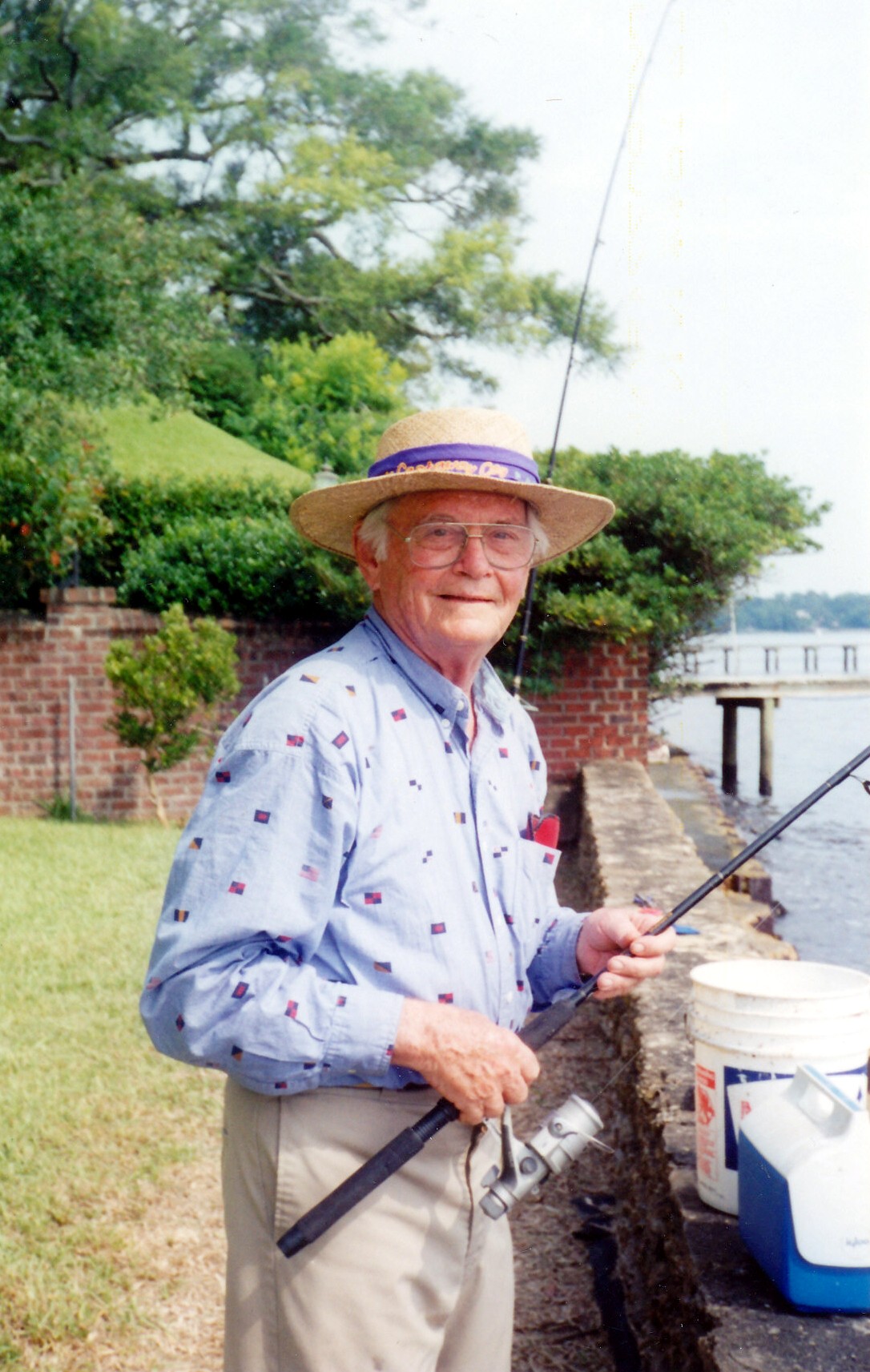
While not a vegetable gardener himself, Dad certainly put fish and fowl on our family’s table at every opportunity. He loved to hunt and fish, and – back when the St. Johns River was healthy – he even caught crabs off the dock. I think of him as a modern day hunter-gatherer. He had a compost pile because he hated the idea of waste, and he could put to good use the leftovers from the kitchen and yard and from his hunting and fishing. This down-to-earth man, grounded in humility and pragmatism, taught me more about good stewardship of earth’s limited resources than he could ever imagine. With every season of compost, and every bountiful harvest, I am grateful.

Posted by: Banta | June 8, 2014

The Work That Reconnects

  “What we most need to do is to hear within ourselves the sound of the earth crying.”           Thich Nhat Hanh                                        

Yesterday I walked on a grassy mountain top bald called Max Patch. At an elevation of 4600 feet, it may not be the highest peak in the area, but some call it the crown jewel of the Appalachian Trail, with a 360º view that includes Mt. Mitchell on the east, the Great Smokies and Mt. Pisgah toward the south and west. For a few rare moments I was alone up there, the only human in my line of sight. I stood barefoot in a buttercup meadow and bowed in gratitude to the four directions, and to the heavens above and the earth below my feet.

031There is something rare and grounding about being barefoot on top of a mountain—a visceral reminder of our deep connection to earth, her ancient history, her immeasurable resources, her fragile future. I held the dirt and grasses between my toes and squeezed them tight, as if to say, “I hear you. I’m with you. I won’t let you down.”

Our friends arrived soon after, for a picnic lunch together. Three of us who gathered there have known one another for more than fifty years, since middle school. Back then we were so young, so before all beginning, with no thought to the ways our lives would unfold, the questions we would need to live, in order to some distant day, live along into the answer. (Rilke, Letters to a Young Poet) We lost touch for decades and our lives took widely divergent paths, but we have history together. Our common experiences over a stretch of very impressionable years—an entire adolescence—forged a bond that bridges those lost decades with surprising ease. We are curious about one another now, about all the time we missed. There is opportunity here, the chance to speak from the heart about our personal journeys and be heard by friends who knew you way back when.

My own words caught in my throat. I just returned a few days ago from a training with 85-year old Joanna Macy in Ashland, Oregon, in The Work That Reconnects—impossibly blessed and humbled to assemble there with a very engaged group of environmental activists, deep ecologists, grassroots organizers, and planetary healers. Still reeling from the impact of that training, and the time with Joanna herself, I had trouble distilling the story down into a living, breathing truth. Something so large takes time to digest and integrate, and does not lend itself to casual conversation. I wanted to tell these old friends what resonated with me from the training, as a way of saying,“Here I stand, here is where I’ve been and where I’m trying to go.”

More than that, I wanted to speak in a way that would contribute to our connection, rather than widen the divide between us—a divide that may include political and religious differences, and the potentially disparate cultural/socio-economic/environmental story lines in which we have chosen to invest our lives. I wanted to speak in language they could hear, that rang true to them—a language that would have them nodding in response, rather than shaking their heads. It felt like a tall order, a mountaintop calling of sorts.

055

With Joanna Macy at Buckhorn Springs, Ashland, OR

The Work That Reconnects is not only about reconnecting each of us to our own core values, to one another, and to the entire Earth community—it is about repairing the divisions that separate us from our life-giving interconnectedness. Preaching to the choir is easy, as in the Oregon gathering of like-minded spirits. It’s quite another thing to reach well past that comfort zone, into the hearts of family, friends, and strangers who do not share your passion, and whose own passions and attachments may be in direct conflict with yours.

Regardless of where our passions lie, surely we can agree to start at a place of gratitude. Gratitude for our common history, and for this mini-reunion on a sunny Saturday in June to hike and break bread together on Max Patch bald. Gratitude for love and family and relative good health. Gratitude for these old mountains that surround us, and eyes to see such beauty. Gratitude, too, for the lives we have lived, and for the experiences we have not shared, that these differences—visible and invisible, known and unknown—may open our hearts and teach us things we did not know we needed to learn.

The next stage, if we dare, is to honor our pain for the world. Looking into the eyes of my old friends, I do not know if they feel this pain, or to what degree. Do their hearts break when they see certain wounded places on Earth, the scars of human activity, or the depletion of natural resources? Beyond that, do they weep for those who lack food security, or access to clean water? Do they grieve the loss of plant and animal diversity, the speed at which species are disappearing? Are they afraid for their grandchildren and the world they will inherit? Do environmental toxins make them angry? Do they feel powerless and vulnerable in the face of all this? Do they think about these things, or pray about them? I wonder what we might learn about each other if we could speak the truth of our pain.

When we own and honor our pain for the world, we experience the meaning of deep compassion, to suffer with, and we begin to reframe this shared pain as evidence of our radical and irrefutable interconnectedness in the web of life, our mutual belonging in the Earth community. We remember, at a cellular level, that we are all in this together. And when we remember, we see with new eyes, the next stage in the Work That Reconnects. The more clearly we see how intricately and inextricably we are connected to all that is, including our ancestors, the generations that come after us, and our brother/sister species, the more we experience a paradigm shift. We look differently at our habits and practices, our consumerism and our contributions—whether to “business as usual” or to a world that will be life-sustaining for all beings.

Once we see with new eyes, we cannot un-see. Rather, we—again and ever again—go forth to do the work or support the actions that call to us, fortified by our re-connection and our mutual commitment to a life-sustaining world. Joanna reminds us: We don’t wait for a blueprint or fail-proof scheme, for each step will be our teacher, bringing new perspectives and opportunities. Even when we don’t succeed in a given venture, we can be grateful for the chance we took and the lessons we learned.

And the spiral begins again. There are hard things to face in our world today, if we want to be of use. Gratitude, when it’s real, offers no blinders. On the contrary, in the face of devastation and tragedy it can ground us. Especially when we’re scared (or tongue-tied), gratitude can hold us steady for the work that must be done.

As a perspiralson of “active hope,” I want to be a part of the Great Turning that will move us toward that life-sustaining place, and I want to invite my old friends, my new friends, my family, strangers I meet on the street, to join me. Even though we cannot see clearly how it’s going to turn out, and even though we may not experience it in our own lifetime, let’s invite the future into our imagination. We cannot hope to build what we have not first cherished in our hearts.


Posted by: Banta | May 11, 2014

Mothers Day Gratitudes

Carrie Belle

Carrie Belle

This Mothers Day I celebrate the strong lineage of women on whose shoulders I stand, and the remarkable daughter who now stands on mine. I honor my maternal great-great grandmother Isabella Denham – known as Belle – who bore six sons and one daughter, Carrie Belle, my great-grandmother. Carrie was born in 1882, in the era of the Gibson girl, and came of age during Prohibition and in the early days of women’s suffrage. Her family likely did not own a car until she was nearly thirty, and she herself did not have the right to vote until the age of 38. A fiesty woman sculpted by grit and gutsiness, she lived to the ripe age of 95, and she voted every chance she got.

Virginia (Nanny)

Carrie married at eighteen to a man eight years her senior, and they had a son and two daughters, the younger of whom became my grandmother, Virginia. Dubbed “Nanny” by her grandkids, Virginia had quite a flair for the dramatic. Born in 1909, she grew up in the jazz age, at the peak of art deco, and claimed the Roaring Twenties as her proving ground. She cut her hair, wore makeup, smoked cigarettes with the men, drank, danced and voted. By all accounts, she was a “flapper” and a risk taker, who loved to sing and do the Charleston. At 19, she eloped in Rye, NY with Babe (Samuel Banta) Hilyard, a handsome Manhattan banker. Eight months later, in October 1929, the stock market crashed, lighting the fuse for the decade-long Great Depression.

00105_p_11ah4r6ynk0097

Ginny (Mom)

My mom, Virginia Turnbull Hilyard, arrived on the scene in May 1930, the only surviving child of Virginia and Babe Hilyard. Ginny learned to read with the Dick and Jane books, first published in 1931, and grew up dancing to the Big Band sounds of Duke Ellington, Benny Goodman, Glenn Miller and Tommy Dorsey. She once described the day in December 1941, when she walked home from a Sunday afternoon movie to find her parents huddled around the radio, listening to President Roosevelt declare war on Japan – following the Japanese attack on Pearl Harbor that morning.

Donna (Bruce’s mom)

My mother-in-law, Donna Aldrich Fichter, was for more than three decades my second mom, and I have missed her every single day since her death in 2010. To her I owe, not only the great gift of Bruce, but also her lessons in love and loyalty, and her quiet grace.

The world that these women walked was vastly different from the one into which our daughter Jordan was born in 1985. That year a man in the UK made the first mobile phone call, Windows released Version 1.0 and the first .com was registered. The music  world introduced the first compact discs (CDs) and the FDA approved a blood test for the AIDS, a growing pandemic.

130

Jordan

Now, more than twenty five years later, Jordan stands tall in her own right – a young woman of strong character and conviction, deep empathy and compelling vision. Watching her at work and play, I have great hope for her generation, as well as deep gratitude for those who came before, their lessons and their wisdom.

For today, that is all, and it is more than enough. To nurturers everywhere, our hearts are full of thanks. We are richly blessed by your love and care.


Posted by: Banta | January 26, 2014

The Humble Raisin

mindfulnessLast week I attended a workshop on Mindfulness-Based Stress Reduction, led by Scott MacGregor, an Asheville psychotherapist and educator who trained with Dr. Jon Kabat-Zinn and other icons in the MBSR field. It was a lunch-and-learn event sponsored by the local chapter of my social work professional organization. I wanted to network and collect a couple of required continuing education credits, so I signed up. Beyond that, registering for this workshop was not a particularly mindful act.

In fact, I had the hubris to assume I already knew what Scott was going to say. After all, I’ve read the works of Kabat-Zinn and Susan Salzberg, Sylvia Boorstein, Shunryu Suzuki, Ram Dass, Pema Chodron and Thich Nhat Hanh. Many of their books are dog-eared from repeat visits. I use mindfulness in my therapy work. I have a sort-of-regular meditation practice. Okay, full disclosure: I used to have a daily practice, and after a lapse of a year or so, I am struggling to reinstate the habit into my mornings. Some days I sit on the cushion for ten or fifteen minutes, some days not at all. So it would be safe to say that, when I walked into the workshop, I was more of an unreliably mindful, often distracted attendee.

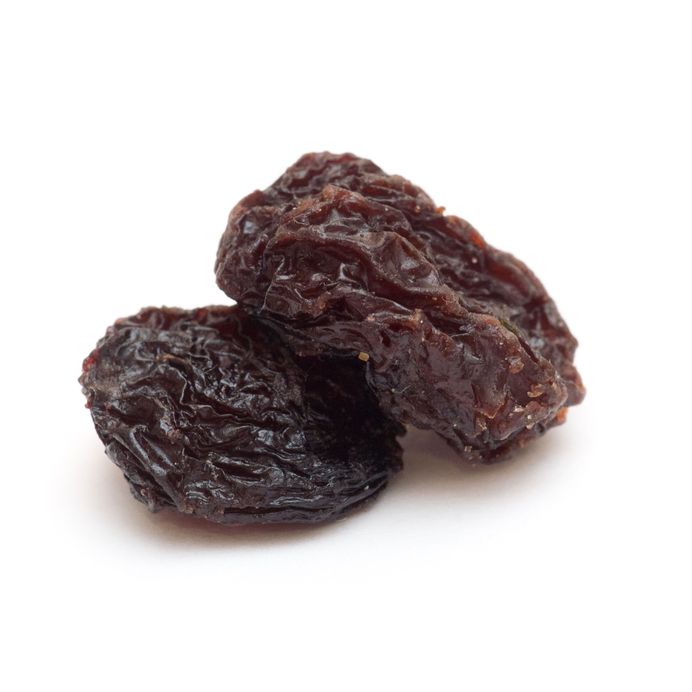
Scott began by bringing us into the present moment. He dropped a tennis ball from shoulder height into his lower hand, and invited us to “drop in” to our bodies, to our surroundings. He asked us to be open to don’t-know mind, to be curious, non-judgmental, to “pay attention on purpose.” And he put two raisins on the table in front of each person in the room.

Raisins

Raisins. Just two. Look but don’t touch for now. First, he laid the groundwork. As a vast body of scientific evidence demonstrates, mind and body are connected in reciprocal ways. Simply put, anger and resentment, negativity and self-criticism, contribute to physical symptoms and illness. Conversely, positive thoughts, compassion for self and others, gratitude and appreciation, strengthen the immune system and fuel the body’s health and wellness. In measureable ways, from moment to moment, we each have the capacity to participate in our own stress or in our own well-being.

For most of us, the greatest sources of stress arise from things we cannot control, situations that are unpredictable, or times of rapid change. When the stressors are chronic, we risk getting hooked on our own negative stories: “I’ll never make enough, be enough, meet the deadline, have a partner who loves me, get out of this hole.” Round and round we go, and as the stories persist, our bodies pay the price – in chronic illness, eating disorders, substance abuse, depression, anxiety.

Mindfulness can change things in profound ways. Becoming mindful breaks the toxic pattern, opens us to a new, more positive narrative. We start, every time, by dropping into the present moment. Right here, right now. Whatever the moment holds, meet it with kindness, generosity, compassion, forgiveness. Be as close as the next breath to your own experience. Without flinching, without turning away. Meet the moment head on, or more accurately, heart on. Ask yourself, “When was the last time I was this fully present to someone I love? When was the last time I really tasted a meal? When was the last time I completely occupied my own body, on a hike, in the shower, during love-making?”

When was the last time you brought your full attention to a raisin? A humble raisin. Here we go. Pick up one of the raisins. Look at it carefully. What words would you use to describe it? Wrinkled, scarred, ridged. How does it feel? Squishy, sticky, rough, uneven. What does it smell like? Musty, sweet, like earth. Can you hear anything? (When I described this sensory exercise to my husband, he said he “heard” the Raisin Bran commercial…go figure.) Now bring the raisin toward your mouth. If you’ve ever watched a nine month old baby in a high chair, you know that the ability to feed ourselves is an act of extraordinary coordination. The raisin is close to your mouth now. Are you aware of salivating in anticipation?

Put the raisin in your mouth but don’t eat it just yet. Roll it around on your tongue first. Are you aware of any taste? Go ahead, take a tiny bite. Now describe the taste. Did you get a burst of flavor? Take your time chewing the raisin and pay attention to what is happening in your mouth. Swallow and follow the raisin’s path with your awareness.

The second raisin is for you to experience on your own, one sense at a time. Take as long as you need.

I invite you consider what just happened. Ask yourself, “So what?” and “Now what?” When Scott asked these questions at the workshop, dozens of hands went up. The synopsis went something like this. Time slowed way down. Those moments seemed to stretch and expand. It was like meeting a raisin for the first time. I had no idea something as small and ordinary as a raisin could hold such a rich experience. If I ate every morsel of food with as much awareness as I ate that one raisin, I would be fully satisfied after three or four bites. I felt so calm and peaceful. If this is what being mindful looks like, I want more of it.

Extraordinary lessons from the likes of a humble raisin. Mindful awareness is indeed within your control. When you bring your full and undivided attention to a loved one, a meal, a walk, a piece of music, a task at work, a sunset – you give your mind and body the opportunity to work in harmony. The practice of mindfulness has the power to reduce your stress level, strengthen your immune system, and shape your brain in positive ways. The more you practice, the more control you have around where you rest your attention and how steadily you maintain your focus.

Mindfulness teachers often suggest you begin with the breath. Take two or three minutes now. Close your eyes and bring your full awareness to your breath. Let the body breathe itself; it knows how to do this very well. No pressure. Simply in. And out. In and out. Notice the sensations in your body as the breath moves from your belly up to your collarbone. Notice what a long, slow exhale feels like. Just follow the flow. When your mind clutters itself with thought, as it likely will do, notice the thoughts but let them go. Come back to the breath.

Watch what happens as you develop a mindfulness practice, over days and weeks. Bit by bit, you are able to be with your experience – whatever it is – without being swept up in old, familiar emotional storms. Bit by bit, the negative emotions and  experiences carry less weight. You hold them more lightly and for shorter periods of time. You take things less personally.You become more emotionally resilient. Bit by bit, you grow in self-awareness and compassion. Your capacity to absorb and savor positive emotions and experiences increases by leaps and bounds. Less stress, more peace. Why not take this moment, this present moment, and begin?

Posted by: Banta | January 9, 2014

An Ode to Snail Mail

When was the last time you wrote a letter, by hand, to a friend or family member in another town or state, or across an ocean? Not an email or text, not a Facebook message or a Tweet, but a real hard copy letter folded into an envelope, stamped and mailed, without pressing a “Send” key on a screen?

Do you remember how it feels to find a hand-written note in the mail, addressed to you? The suspense as you open the envelope? The delight in reading news from someone who has reached out to you in this very personal way?

If you have children, do they know how to put pen (or crayon) to paper and write a simple letter? Can they say thank you in writing for a gift or a kindness? Would they know the importance of writing a note to someone who has suffered a loss?

What does it mean that we, as a culture, have drifted so far from the words we write with our own hand? In texts and tweets we convey messages in such truncated form they scarcely resemble language.We deliver Happy Birthday and Congrats and even condolence greetings in sound bites on Facebook and Twitter. We “Like” someone’s status or photo, article or video link, often without comment.

For all the gains we enjoy with our screens and our social media, I fear we have lost much more than we realize.The nuances of language, the intimacy of exchanging letters written in longhand, the tolerance for delayed gratification as we await a reply, the ritual of sitting with pen and paper and bringing a loved one to mind.

Our addiction to haste and urgency is palpable. Our impatience, a given. Chronic distraction and divided attention are now the norms in many of our social interactions, including the family dinner table (fast becoming obsolete). Heads bent over phone or notebook, thumbs going a mile a minute. Who can begin to measure what we have lost in our capacity to truly be present to one another?

Some years ago, just at the turn of the millenium, I received an unusual gift, a heavy tome entitled Letters of the Century: America 1900 – 1999 (Lisa Grunwald and Stephen J. Adler, Eds.). It opened a compelling window on the intimate histories of presidents and war heroes, immigrants and ordinary friends. The letters invited me into musty candlelit parlors, onto battlefields, into boardrooms and back rooms. Like excerpts of memoir in real time, the letters enlivened people long dead, describing in careful, often heartfelt detail, their daily lives, their struggles, their fears, their patriotism, their private longings.

Letters 4Letters 1

In my parents’ and grandparents’ day, books of collected letters were commonplace. People saved letters, love letters in particular, often tied up in ribbons and tucked away in a memory box for the next generation to discover. Where will we find collections of letters now? Strewn in the winds of cyberspace? Banished to the Trash icon on the screen?

For our “small but mighty family” of three, this will be the Year of the Letter. We have each taken up the challenge to hand write fifty two letters this year. For the Libras among us, that could mean one letter a week. For the Aries member of the family, it might look more like a muscle numbing scramble between Thanksgiving and Christmas. Regardless of the pace or pattern, I appreciate both the challenge and the invitation.

Letter writing is no less a spiritual practice than meditation or tai chi, centering prayer or yoga. Releasing attachment to results, come into the body. Focus on the breath. Bring your energy into the present moment. Set the intention to speak from the heart. The words will flow. Your writing muscles will remember.

 Letters 3

Posted by: Banta | January 1, 2014

Saying Yes

I’ve never been much for New Year’s resolutions. They feel like a set up for failure or disappointment to me. Mostly because I find it hard to hold onto any year-long resolution for more than a nanosecond. By Valentines Day I either can’t recall or no longer care about whatever really big change I resolved to make in the new year.

The path of setting an intention works far better for me. As a wise yogi friend puts it, intentions are more flexible and fluid than resolutions. Intentions move and shift with us, as the need arises. Intentions adapt to our mind-body-spirit evolution. They are not fixed or demanding. Intentions come with a kinder, gentler invitation to continue along a path. Keep going, they say, you’re doing just fine so far.

Happily, an intention need not remain static for an entire year. Rather, we can choose to set a new intention with every new moon, or at the beginning of each month, if we prefer more manageable and workable time frames. For that matter, we can choose to live each moment in a state of ever-shifting, ever present intention, depending on what the moment brings to us, asks of us.

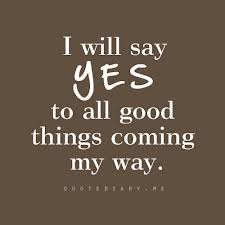
For this first new moon of 2014, on this first day of January, my intention is to say yes. For the spontaneous and adventurous among you, yes is a no-brainer. Saying yes is what you do, what you live for. Not so for the rest of us, who are hampered by more cautious (okay, sometimes even anxious) constitutions. For folks like us, yes can feel like uncharted, scary territory. Speaking just for myself, I’m a creature of habit. Often to my own detriment, I like my predictable routines. They define my comfort zone. Stepping outside of that zone requires the kind of courage that does not come naturally to me.

But something strange has happened. Over the Christmas holiday, I received an unusual and unexpected gift from my daughter. She challenged each of us in our “small but mighty” family, as she calls it, to do 100 new things this year.  One hundred new things. I cannot possibly participate in this challenge without stepping outside of my comfort zone, without venturing into uncharted territory. In fact, the only place I can hope to find 100 new things is in that uncharted territory. Where else would they possibly be?

Without knowing it, my daughter put into my hands a road map to yes. Whether I say yes twice a week for a year, or every day until the spring thaw, this road map puts me on a path I would never have chosen on my own. Oddly, the way the challenge came to me, I find it impossible to resist. Already I feel a curious rewiring in my brain.  I am actually scanning the horizon for new things to do. This is unheard of. Truly. Those who know me well are silently nodding their heads in agreement. They have not experienced this Banta before. And a few of them are insatiably curious as to what the year will bring. Stay tuned.

I share with you this first intention of 2014, the intention to say yes, with the hope that you will find ways to say yes, too. If not to 100 new things, then perhaps to new joy, to love, to hope, to compassion, to living more fyesully into the light of your own true Nature. In the words of Dag Hammarskjöld, “For all that has been, Thanks. For all that will be, Yes.”

Posted by: Banta | November 17, 2013

The Healing Power of Gratitude

Did you know that the simple practice of giving thanks can improve both your physical and mental health? Research in the field of Positive Psychology points to a wide range of benefits. A daily gratitude practice has been shown to strengthen the immune system, lower blood pressure, reduce the risk of heart attacks, improve the quality of sleep, and alleviate symptoms of anxiety and depression. In addition, people who practice gratitude are more optimistic about the future, experience more joy, feel more connected to others and enjoy more positive personal relationships. They are also less emotionally reactive, and better able to deal with challenges that arise without becoming overwhelmed.

132

Gratitude is a proven antidote to stress. If you could ward off some of your holiday stress by implementing this one daily routine, why not begin right now? It’s free. It takes only 5-10 minutes a day. You can do it anywhere, at any time. You can practice gratitude standing up, lying down, in your car, on your bike, in the produce aisle, or sitting at your computer. It requires no extra equipment, no special training, no advanced degree.

Some people enjoy having a partner in gratitude, not unlike an exercise buddy, to help keep them on track. Some people keep a daily gratitude journal. Some use visual cues, like a traffic light or an image on one of their screens, as a reminder to give thanks. Some subscribe to www.gratefulness.org and sign up for the Gratitude Word of the Day to be delivered to their email each morning. Some use a Mindfulness Bell app on their phone. The bell chimes randomly during the day as a reminder to return to the present moment, and be grateful.

To create a gratitude practice, all you need to do is count your blessings. “I am grateful for (fill in the blank).” Do this every day, morning and night, and you create what I call a gratitude sandwich. Try this for a week and see what happens. Bracket your day with grateful thoughts, but find new things to be grateful for every day (no repeats). Before you get out of bed, think of three things you are grateful about. Before you go to sleep, think of three different things.

See where this is going? Day by day, you will build a sense of abundance. You will retrain your brain to focus on the positive. And when we put our attention on what we have, rather than what we lack, we experience the joy of truly abundant living.

In gratitude,
Banta

Posted by: Banta | June 17, 2013

New Roots and Deep Gladness

June 2013. Month 1 of what I still call “my husband’s retirement.” Clearly that is something of a misnomer. If he is retired and living in North Carolina, and I want to live with him, then do I need to be at least semi-retired myself? We no longer have a Florida address or a bed of our own in the 904 area code. When we do drive south, we will stay in someone’s guest room. That speaks to short and infrequent visits, lest we wear out our welcome. Still, when someone from Florida asks, “So, you’ve moved to North Carolina?”, I experience a tiny internal panic attack. “It’s complicated,” I say. Hence, I must confess, I am still in a little bit of denial about what is going on here. That, and neither of us really likes the word “retired.” We are not stopping, nor going to sleep. We just began a new chapter.

Truth is, deep down I am ecstatic that we do indeed live in North Carolina now. If anyone in our local mountain community asks, “You’re finally here for good?”, I will unabashedly and joyfully say, “Yes! Finally!” My answer (and my emotional landscape) depends on who’s asking the question. I have a fair amount of ambivalence about moving a seven-hour drive away from my elderly mom. Yes, there are other siblings nearby. Yes, I have lived within thirty minutes of her for twenty-five years. Yes, I can show up within those same seven hours in case of an emergency. Given her memory challenges, my mom scarcely remembers where I lay my head, so if we talk on the phone often enough, we can both pretend that nothing has really changed.

The other source of ambivalence comes from my attachment to a well-established psychotherapy practice in Florida. Built over several decades, it is a practice characterized by clients who are committed to personal growth, and invested in learning how to manage more effectively their anxiety and depression, their own life transitions, the residual effects of early trauma, family issues or other intimate relationships that are estranged or riddled with conflict. They show up, they do their work, and they take the lessons they learn back into their daily lives. I have no wish to leave them in the lurch, or disengage prematurely from the alliances we have forged together. Nor do I wish to hold on longer than is helpful or necessary to them.

For now, it feels right to simply sit with the ambivalence. Over a period of time, as yet without a date or deadline, I hope to navigate the inevitable transition from being a therapist with a full time private practice, to – well, to the next thing. Parker Palmer reminds me (in his lovely book, Let Your Life Speak): “As often happens on the spiritual journey, we have arrived at the heart of a paradox: each time a door closes, the rest of the world opens up. All we need to do is stop pounding on the door that just closed, turn around – which puts the door behind us – and welcome the largeness of life that now lies open to our souls. The door that closed kept us from entering a room, but what now lies before us is the rest of reality.”

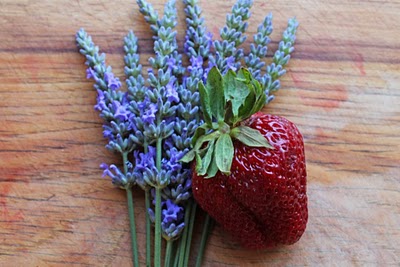
Already, the rest of the world is opening up. The natural rhythms here invite us to wake with the sun and go to bed early. Morning birdsong and evening fireflies punctuate those rhythms. Any day that I have dirt under my fingernails, or Bruce has sawdust in his hair, is a very good day. After thirty-five years, we may even discover how to occupy space in the kitchen at the same time. Two days ago, I put up half a dozen jars of strawberry and lavender jam, while Bruce made goat’s milk yogurt. Yesterday, I dried several pints of cherries in the dehydrator. We did a Fathers Day float down the French Broad River with our daughter, and I planted a second round of sage and lavender, coreopsis and phlox.strawberry-lavender

I think of this stretch of time as putting down new roots, exploring and cultivating new community. The outward and visible signs are plentiful; energy is running high and we fall into bed exhausted at the end of our days. On the inside, however, a different kind of energy works its magic. The largeness of life that now lies open to our souls includes an evolving sense of vocation. Again, from Parker Palmer: True vocation joins self and service, as Frederick Buechner asserts when he defines vocation as “the place where your deep gladness meets the world’s deep need.”

The place where your deep gladness meets the world’s deep need. No small calling, that. I’m guessing that true vocation rarely coalesces all at once, in a bolt of lightning or a burning bush. We should be so lucky. Rather, for most of us, vocation shows up one leaf, one bud at a time, over months or years – and often quite by accident or disguised in a serendipitous collision of happenings. The least we can do is keep our eyes open, listen with our whole hearts, and stop pounding on the doors that close, ever so gradually, behind us.

Posted by: Banta | June 14, 2013

A Lion’s Legacy

Were he still alive, dad would celebrate his 90th birthday this month. He died mid summer 2009, just weeks after he turned 86. Twice that June, on Fathers Day and on his birthday, the family gathered around dad’s hospital bed, set up in the downstairs den of my parents’ house. We brought balloons and cake and a few awkward gifts he would never use. We pretended to be festive. We knew he would not be with us much longer. So we loved on him and held his hand and told stories. We alternately laughed and wept, buffeted by one another, and at the same time navigating a room full of private griefs.

Ours was a complicated relationship. A daughter by choice and not by birth, I came to know George when he started courting my mother. Her first marriage (begun when she was nineteen) had ended in divorce when I was barely a toddler. My biological father told me years later that he thought it would be “less confusing” to remove himself from my life altogether, so certain was he that my mother would remarry. I never understood that logic, but that’s a story for another day. Luckily, for me and for all of us in the sweep of dad’s broad legacy, my mom found George.

 These words came to me the first June after dad died.

Out of habit
I stood in the card aisle
reading
Fathers Day and Birthday
messages from daughter
to dad,
and looking for you
between the lines.

The depth of this longing
took my breath away.
June was always
your month.

Last year when we
circled the hospital bed
with balloons and good cheer,
your eyes drank us in
one face at a time.

You held each gaze,
speaking without words
all the love in your heart,
knowing this would be
our last June together.

You had already started to disappear.
Your cheeks thin, and loose skin
hanging from legs
with nothing left to give.

I knew you were leaving us,
that it was almost time.
And I missed you already.

Now it is June again.
Your chair is empty.
Your once bellowing voice gone silent.
What wouldn’t I give for
one more testy argument,
one more knowing look,
once more hearing you say,
“Thanks for the call, darling.”

When he first met my mother, George had been a bachelor for thirty-two years. After college, interupted by a stint in the Navy during WWII, he lived at home with his parents for a time and worked in his father’s insurance company. When that got old, George transferred to Tampa for a taste of independence. That’s when he met Ginny. Since her divorce (a phenomenon bordering on scandal in 1952), my mom and I had divided our year between my great-grandmother’s home in Jacksonville, and a great aunt and uncle’s bayfront house on Siesta Key just south of Sarasota. This same great aunt set up George and Ginny on a blind date at a local soda fountain. And the rest is history.

George adored my mother from the first time he laid eyes on her. To his credit, he fully understood that he needed my cooperation to win my mother’s hand. We were a package deal. So George courted me with the same enthusiasm and persistence that he courted my mom. At four years old, and essentially fatherless, I was hungry for this kind of attention.

“Come on, Banta, let’s go for a swim. I’ll teach you how to float.” George coaxed my timid self into the calm waters of Sarasota Bay. He scooped me up and waded out into the bay until he stood waist deep in the water. Then he swirled me around a few times until I forgot to be afraid. He talked to me as he swirled. Slow and easy, patient and present, he explained what we were going to do and how the water would hold me up and rock me like a baby. Then he put his hand on the small of my back and told me to lie on the water like I was going to sleep. He promised not to let go.

George kept his promises. I could tell by the feel of his hand on my back. I relaxed into the water, buoyed by George’s hand, and I floated. Like he said, the water cradled and rocked me and I felt safe. So safe that not long after that I let George teach me to swim. He still held a few records in the butterfly stroke from when he was in college. He knew his stuff and he wanted me to love the water. I started to love George instead and I told my mother we should marry him. She loved him, too, and so we did.

Fast forward five years and two new siblings later. When I was in the fourth grade, I had to miss school one April day for a mysterious meeting at the courthouse in downtown Jacksonville. I rode in the back seat and George drove. He and my mother talked in code all the way there.

“Will it be a long wait to see the judge, do you think?” my mother asked.
“I hope not,” George replied. “Harold is expecting us. We’ll have a private hearing with him.”

Judge. Private hearing. My heart pumped wildly in my chest. I had never missed school for any reason other than being sick and I was scared. Parents did not talk to kids in those days. At least not my parents. And this sounded ominous. My insecure nine-year old belly rumbled with worry. One father had already left me. Was this one going to give me away to some judge? Had I done something wrong? I scanned the internal family rule book. Made my bed this morning. Helped with the dishes last night. Did my homework. Watched my two little sisters when asked. Tried not to sass the grown-ups. Remembered my yes ma’ams and no sirs, most of the time. Hadn’t needed a switching since the Christmas a few years back when I slapped Blue. In my defense, I didn’t slap her hard, and she didn’t even cry. But she waited until my handprint appeared on her cheek and then she ratted me out.

Blue was my private name for the sister who arrived nine months and two days after my mom and George’s wedding. They said she turned blue for just a minute right after she was born, and they made a huge fuss over this. They said she could have died. I was five years old then, and didn’t think I would have missed her. Her arrival changed everything. From the moment my mother announced she was pregnant, all George could think about was that baby growing in her stomach. He stopped taking me swimming, stopped pulling me into his lap to read after supper, stopped calling me his special girl. I hated that baby before I laid eyes on her. She was George’s flesh and blood and I was not, and I was sure she would suck all the father-love out of his heart and keep it for herself. I called her Blue for spite. Nobody else knew that. They thought it was cute.

So now I’m in the back seat of the car and I’m having a nine-year old panic attack because I think my parents are going to give me away. When we got to the courthouse and were directed to Courtroom D, I held my mother’s hand all the way down the long paneled hallway as if these were my last few moments with her. We piled into a long pew and waited for the judge to arrive. I sat very still, willing myself to become invisible. Maybe they would forget what they came here for. Maybe the judge wouldn’t show up and we would just go home. I made a few deals with God while we waited. I promised to be nice to Blue from now on. I said she could have the biggest piece of cake, the last cookie, my favorite Barbie.

The judge came. He and George shook hands and made small talk about fishing. They celebrated how well the kingfish were running this year, and wondered where the shad were hiding in Lake George. I listened for the part where they would appoint some smarmy foster parents to come and get me, and I wished I had brought my blue flannel blanket and my teddy bear and my good luck rabbit’s foot. I thought they would come in handy for the coal bin under the back stairs where I’d probably be sleeping from now on. My heart still pounded so hard I was sure the judge could hear it from where he sat up there in front. And my face was wet with hot silent tears.

Finally they called my mother and me up. The judge put his glasses on and read some papers, then handed them down to George. “These seem to be in order,” he said. “Just sign all three copies and we’ll get them filed for you. You can expect to have the new birth certificate within four to six weeks. Any questions?”

I had plenty of questions. My mother shook her head and smiled. George signed the papers and handed them back to the judge. They shook hands again. This chummy business creeped me out. Still no foster parents in sight. Would somebody please tell me what is going on?

The judge looked down at me and his expression softened. “Why I think it’s time to introduce young Banta here to her new daddy.” I gulped. Here it comes. Something registered with George, like he had forgotten the niggly little detail of telling me what we were doing here at the courthouse to begin with. He actually knelt down and looked me straight in the eye. “Banta, honey, I hope it’s okay with you, because I am now officially your father and you are officially my very own daughter.”

I stared at him. What was he talking about? My mother chimed in, “George has adopted you, Banta. We came to the courthouse to make it all legal and proper. From now on your last name will be Whitner, just like me and your sisters.” She paused for effect. “Now what do you say to that, child?”

That was family shorthand for, “Say thank you to your new daddy, Banta.” So I did. I was so relieved I jumped up and wrapped my arms around his neck. My daddy. He hugged me back real hard. Mama smiled and mussed my hair. Then we all went out to lunch at Morrison’s cafeteria and had hamburgers and macaroni salad and cokes and green jello and butter pecan ice cream for dessert. I ate like there was no tomorrow and made it through the entire meal without either of them telling me to mind my table manners, don’t chew with your mouth open, wipe your chin, don’t slurp up the straw. So they weren’t getting rid of me after all. Halleluia thank you God and help me with all those promises I made about Blue, cause they will be powerful hard to keep. I’ll do my best.

This Fathers Day, I hold Dad close to my heart. The card aisle still brings me to tears, but I have learned that, in addition to finding cards for my own dear husband, the words that echo the dad sentiments best are those I find for my brother John. John is the youngest of George’s four children, born when I was a junior in high school. He is a grown man now, with teenaged children of his own. I love watching him be a dad. He is present with his kids, patient, engaged, proud of their successes, compassionate with their growing edges. He is a good teacher. He knows how to balance work and play and family time. He is fiercely devoted to and protective of his family, which is what he saw modeled for him by our Dad.

At Dad’s funeral, John shared these words:42
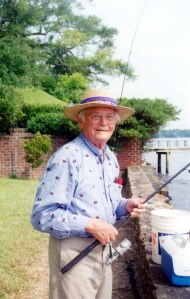
I think of my father as a lion. When he roared, all the creatures of
the forest took heed. But the true measure of this lion was not in his
 roar, but in the sheer size and remarkable diversity of his seemingly
endless pride.

From my mother Ginny, the love of his life, to his children,
grandchildren, his sister Martha, his parents John and Eleanor, to his
countless friends, colleagues and employees, so many here today, Dad
loved us all with the most steadfast, enduring, reliable, and true
kind of love.  And protective…beware the lion if you mess with one
of his pride.

If he was your friend, you did not have a truer one. If he was your
boss, you never had a better one. If he was your mentor, you never
learned more than from George. If you were his wife, you could not
have been loved more. If you were his family, there was no better
provider. If you were his son, you could find no finer example of a
father, husband, man, leader and friend than dad.

Already, I miss the lion.

As do I. Every single day.
Posted by: Banta | June 11, 2013

The Power of Intention

When you put an intention out there into the universe, stuff happens. Just sayin’. Take the intention to spend the illusive third half of life in the mountains of western North Carolina. Follow the thread from the gee it would be great to live here one day conversation begun on some paradisical waterfall hike ten years ago, to the holy shit we live here now lightning bolt realization that hits us a dozen times a day. The power of intention will rock your world.

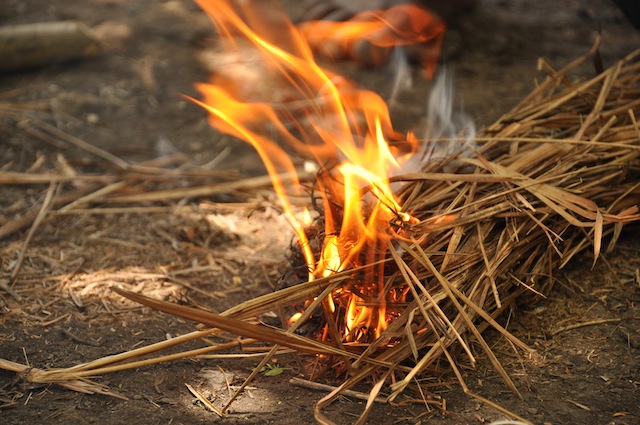
But intention alone is not enough. Intention is only the kindling laid down in the fire pit. For an intention to catch hold, somebody has to strike a match. Even then, there are no guarantees. Maybe the wind will snuff it out. Or maybe the kindling is damp. Maybe you can’t find a match and have to start your own fire using a wilderness survival skill you saw on the internet.

Making fire without matches is a tricky business. You have to generate enough friction to spark a small burning ember. You need the right kind of wood, a little tinder nest made of dry leaves or grass or pieces of bark, and a spindle stick. Say you have all the right supplies. You can still labor over your bow drill for hours and not light an ember. You can make lots of smoke and sweat and utter a great many swear words through gritted teeth. You can work a few blisters into your palms with all that fierce determination, and still not get a fire started.

First the kindling of intention, then the spark. If by some convoluted miracle the conditions are exactly right, the ember will catch. If you blow on the ember just so, a tiny fire will appear in your tinder nest. If the tiny fire holds, the kindling in your fire pit may take that little flame and run with it. You’ll add a log, and the log will catch. Add another log, and another. And pretty soon, the fire has a momentum and a life all its own. All from the power of intention. tinder nest

Getting to these mountains was a lot like learning how to make fire without matches. Our early intention was little more than a daydream, a what-if game we played with one another. The first few generations of kindling probably turned to compost before we laid down the right mix. Five years after the gee it would be great to live here one day chat, we bought three acres of woods and stream just outside of Black Mountain, NC. About twenty minutes later the real estate market crashed and any hope of selling our primary home in Florida went over the cliff with it.

And so, we waited. In the waiting, we gathered material for the tinder nest, combed the woods for the right spindle stick, and started making smoke and sweat. Lots of sweat. The friction mounted. On the Florida home front things were not going well. Elderly parents grew frail and died. A job that was supposed to last forever went away and took with it a man’s pride. Relationships got prickly. A house finally sold but for much less than we hoped. And still we waited. Holding intention.

Then, finally, a small burning ember caught and a fragile flame appeared in the tinder nest. A new job restored pride and purpose. Downsizing to smaller space felt good. Debt burdens began to ease. We found the right builder to work with (see The Road to Wayne) and broke ground on the house in Black Mountain. The kindling took that fragile flame and used it to light one log after another, until the fire burned with an intensity that gathered up our intention in its heat. All the what-ifs and bedtime stories we had told one another for years now danced in the light of that fire.

We held an intention until conditions were right. We held on in the face of our own resistance. We surrendered to timing and circumstances not of our own making, and resolutely cleaned up the messes we did create. We held on through the friction and smoke and sweat, through the downturns and detours and delays. We rode the waves of momentum that our long ago day-dreamy intention collected along the way. Often, we held on for dear life. But from this side of the fire pit, all of that makes sense now. From this side of the fire pit, we begin to set new intentions: to put down roots, to build community, to live mindfully with playfulness and passion. And most of all, to give back with generosity in ways not yet clear to us. And to be thankful.

« Newer Posts - Older Posts »

Categories